


National Geographic 1994 July
Publisher: National Geographic
Format: Paperback
ISBN: none
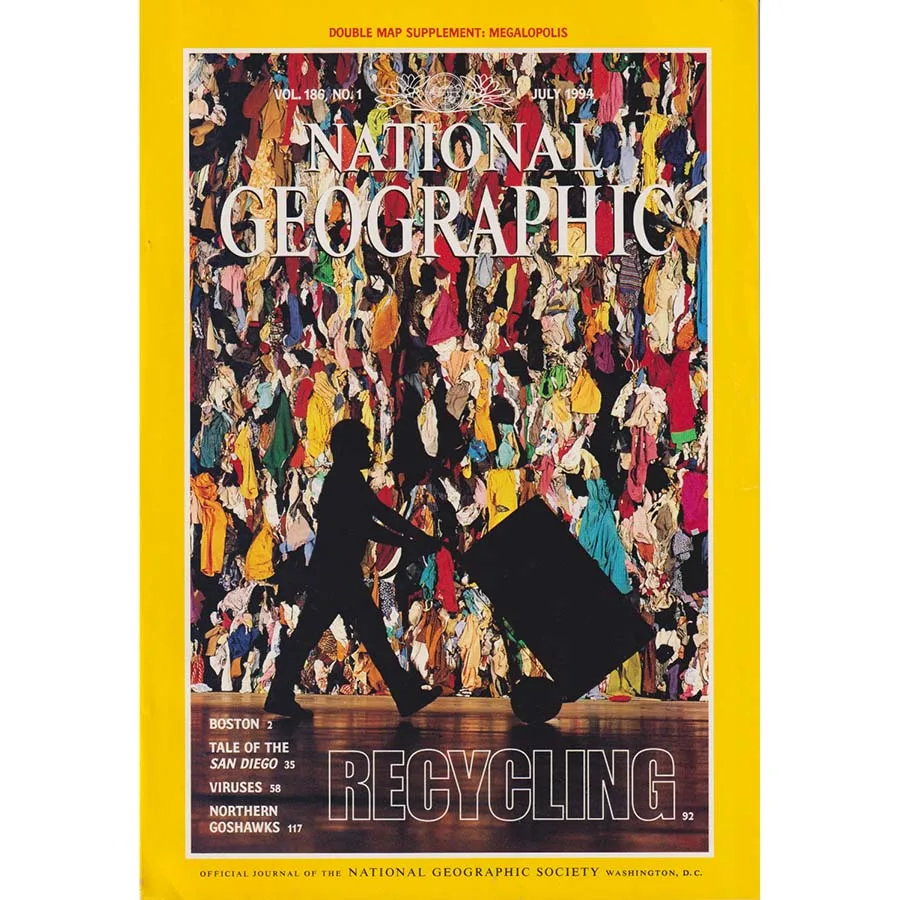
National Geographic, July 1994: the issue that looks you dead in the eye, gestures at a towering wall of discarded clothing, and says, very calmly, “So… how’s your consumption going?” And then, because it’s National Geographic, it follows up with immaculate photography, earnest reporting, and the kind of politely devastating facts that make you want to hug a recycling bin.
The cover alone is a tiny civilisation: a lone figure pushing a trolley across a stage of cast-off fabric, like an urban Sisyphus in sensible shoes. It’s Recycling—not as a smug little habit, but as a full-blown planet-sized logistical opera. Expect the magazine’s classic trick: it makes a difficult subject look gorgeous, then gently places a moral dilemma in your lap and backs away.
Inside, you get that wonderfully ‘90s NatGeo mix of the urgent and the unexpected—because you can’t spend all your time contemplating the afterlife of polyester. So alongside the big, satisfying, world-fixing theme, you also get:
-
Boston — because no issue is complete without a city being explained to you as if you’ve just arrived from space and need the landmarks, the history, and the general vibe translated into glossy prose.
-
A tale of San Diego — sunshine, edges, and the complicated business of place-making, delivered with that “we have diagrams somewhere” confidence.
-
Viruses — the microscopic reminder that nature doesn’t care about your plans and that the most dramatic journeys on Earth can happen inside a droplet.
-
Northern goshawks — a flash of feathers and ferocity, because NatGeo will always, always make room for something magnificent that does not pay rent and refuses to be domesticated.
And then there’s the bonus time machine: the included Boston to Washington map (circa 1830)—a glorious pull-out that essentially says, “Here’s the East Coast before it got busy.” It’s part geography, part historical gossip, part extremely tasteful wall art. The sort of map that makes you want to trace routes with a finger and announce, unprompted, that you are “planning a journey” (you are not, but the map insists you could).
Condition: Good, which in Crappy Old Books terms means it’s lived a little—like all useful objects should. Still bright, still bold, still ready to make you feel simultaneously smarter and slightly indicted by the concept of stuff.
A classic mid-’90s NatGeo: big theme, bigger curiosity, and a free map that quietly outshines half the décor in your house.
Keep browsing: See more National Geographic books Other books by National Geographic
